
Gladson Dungdung-Overview
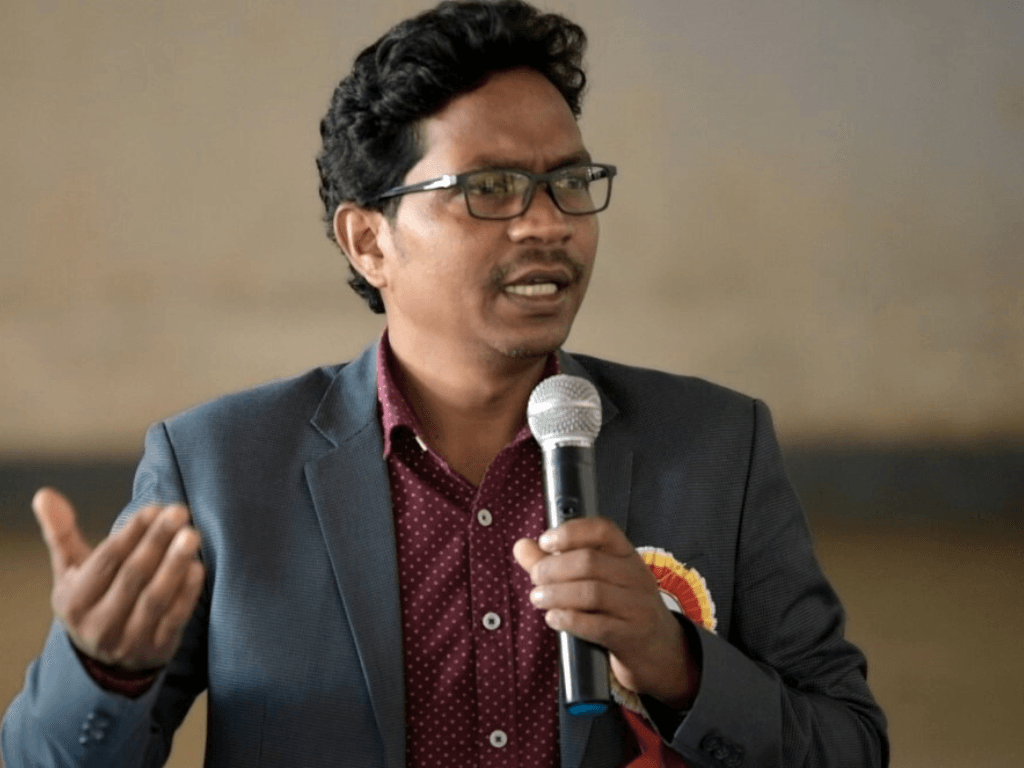
Gladson Dungdung-Overview-Adivasi Struggler in a Changing India
- Who is he? Gladson Dungdung is an Indian Adivasi (indigenous) activist, writer, and speaker from Jharkhand, dedicated to defending the rights of marginalized tribal communities against displacement, land grabs, and cultural erosion.
- Key focus: His work highlights human rights violations, environmental justice, and the preservation of Adivasi identity, drawing from his own experiences of loss and displacement.
- Notable impact: He has authored over two dozen books, founded key organizations, and faced government harassment for his advocacy, yet continues to influence global discussions on indigenous issues.
Early Life and Background
Born on May 2, 1980, in a Kharia Adivasi village in Simdega, Jharkhand, Dungdung grew up in a close-knit community surrounded by forests, where harmony with nature and collective living shaped his worldview. His family was displaced by a dam project shortly after his birth, and at age 10, he lost both parents to violence over a land dispute. These hardships fueled his commitment to activism, leading him to overcome barriers like child labor to earn a postgraduate degree in human rights.
Activism and Contributions
Dungdung serves as general secretary of the Jharkhand Human Rights Movement (JHRM), which he co-founded, and has established platforms like Adivasi Publications and the magazine Adivasi Hunkar to amplify indigenous voices. He speaks internationally on topics like police brutality and women’s rights, and from 2011 to 2013, he advised India’s Planning Commission on monitoring Adivasi welfare. In 2014, he received the Samata Ratana Award for his community work. Recently, in August 2025, he publicly urged India’s President to recognize Adivasis as indigenous peoples under international law.
Publications and Ideas
Dungdung has written extensively on Adivasi struggles, with books like Mission Saranda (2015) exposing resource wars in tribal forests. His writings promote “Adivasiyat”—an ideology of equality, self-reliance, and nature coexistence—as a solution to climate change and inequality. He edits reports on human rights abuses and contributes to outlets like Outlook India.
Challenges Faced
As a defender of vulnerable communities, Dungdung has endured passport seizures (2014), flight denials (2016), bank account freezes, and legal cases (2017) for protesting land laws. These stem from broader risks to Indian activists, including smear campaigns labeling them as extremists.
Gladson Dungdung stands as a pivotal figure in India’s indigenous rights landscape, embodying the resilience of Adivasi communities amid relentless pressures from development, capitalism, and state policies. This detailed profile draws on biographical accounts, interviews, and his own writings to trace his journey from a displaced child in Jharkhand’s forests to a globally recognized advocate. It explores his personal roots, activist trajectory, intellectual contributions, and the perils he navigates, while situating his work within broader socio-environmental debates. As of late 2025, Dungdung remains active, using social media to challenge ongoing injustices like land acquisitions and cultural defamation.
Personal and Familial Roots: A Childhood Forged in Harmony and Loss
Dungdung’s story begins in Latthakhamhan village, a Kharia Adivasi settlement in Simdega district, Jharkhand, nestled amid dense forests that pulsed with life—wildlife, birds, insects, and medicinal plants. Born on May 2, 1980, he was raised in a multicultural Adivasi enclave where Munda, Cheekbadai, Lohra, and Gond families coexisted without caste or class divides. Homes of mud, slate, and wood housed extended kin and livestock, while weekly dances, shared feasts, and communal labor fostered unbreakable bonds. The economy was need-based: rain-fed crops like paddy and millet supplemented forest gifts such as roots, fruits, and mahua flowers, with no room for greed. A Village Forest Protection Committee enforced sustainable practices—limited tree-felling, weekly firewood gathering, and mandatory sapling planting—using cow dung as fertilizer and passing down ecological wisdom orally from elders.
This idyllic existence, however, was shattered early. In 1980, an irrigation project on the Chhinda River submerged his family’s land, displacing them and eroding their autonomy. The trauma deepened in 1990 when, at age 10, Dungdung witnessed the brutal murder of his parents amid a violent land dispute. Orphaned and thrust into survival, he toiled as a daily wage laborer, cycle mechanic, and tea shop helper to fund his education, facing systemic barriers that barred Adivasi children from schools. Despite these odds, he pursued higher studies, earning a postgraduate degree in human rights, a credential that armed him for the battles ahead.
His motivations are deeply familial. His grandfather, a teacher and social reformer, instilled values of justice, while his father—himself a displaced activist—embodied fearless struggle. Dungdung recalls rejecting lucrative urban jobs after agencies like TATAs and Mittals displaced communities, choosing instead the “perpetual struggle” of advocacy. “After the brutal murder of my parents, I had to struggle a lot,” he shared in a 2025 interview, crediting books on global people’s movements, meditation, and his father’s legacy for sustaining him. This personal crucible transformed grief into purpose: a vow to stand by the oppressed, no matter the cost.
Activism: Building Platforms for Adivasi Resistance
Relocating to Ranchi, Jharkhand’s bustling capital, Dungdung channeled his experiences into institution-building and global advocacy. As general secretary of the Jharkhand Human Rights Movement (JHRM)—which he co-founded in the early 2000s—he coordinates efforts to document and combat atrocities against Adivasis, including police violence, gender-based harms, and resource exploitation. JHRM’s annual reports, edited by Dungdung, expose patterns of state neglect, from arbitrary detentions to enforced disappearances.
He also launched Adivasi Publications in 2010, an imprint dedicated to indigenous literature in English and Hindi, and Adivasi Hunkar, a magazine amplifying marginalized narratives. These ventures counter the erasure of Adivasi history, often portrayed in mainstream media as “savage” or “backward.” From 2011 to 2013, Dungdung served as an honorary member of India’s Planning Commission’s Assessment and Monitoring Authority, reviewing welfare schemes for scheduled tribes and pushing for land rights reforms.
Internationally, he has addressed forums in Germany, Thailand, and the UK, linking India’s tribal struggles to global indigenous movements—such as Australia’s fight against Adani mining or the Philippines’ resistance to oil giants. His 2014 Samata Ratana Award recognized these efforts, honoring his role in empowering Adivasi self-governance. Domestically, Dungdung has led protests against tenancy law dilutions, like the 2017 amendments to the Chotanagpur Tenancy Act, which threatened tribal lands.
In 2025, his activism remains urgent. On August 1, he decried the forceful acquisition of Adivasi land for the RIMS-02 project, citing violations of the Land Acquisition, Rehabilitation and Resettlement Act, 2013, and tagging political leaders for intervention. Days later, on August 8, he petitioned the President of India to affirm Adivasis as “Indigenous Peoples” under UN frameworks, a call echoing centuries of resistance. By October, he pursued legal action against defamation over his critiques of the Kudmi community’s claims, underscoring his willingness to confront intra-community tensions.
Intellectual Legacy: Writings as Weapons of Awakening
Dungdung’s pen is his most potent tool, with over two dozen books dissecting the “endless war” on Adivasi existence. His oeuvre spans memoirs, investigative journalism, and ideological treatises, translated into multiple languages and launched at events like the 2013 New Delhi World Book Fair. Key themes include displacement’s psychic toll, forest rights as cultural lifelines, and “Adivasiyat” as a revolutionary ethos.
In Mission Saranda: A War for Natural Resources in India (2015), he unmasks the Saranda Forest—a biodiversity hotspot and home to 125,000 Adivasis—as a battleground for mining barons, where “development” masks ecological plunder and human rights abuses. Whose Country is it Anyway? (2013) compiles untold stories of indigenous dispossession, challenging the narrative that Adivasis are “uncivilized” interlopers in their ancestral lands. Other works, like Endless Cry in the Red Corridor, probe Naxalite conflicts as symptoms of state failure, while Adivasis and Their Forest defends communal stewardship against privatization.
As editor, he helmed Jharkhand Human Rights Report, 2001-2011 and Nagri Ka Nagara, compiling data on violations. His articles in Outlook India and Countercurrents critique capitalism’s creep—urbanization, consumerism, and tech-driven alienation—that erodes Adivasi languages, dances, and economies. Dungdung envisions Adivasiyat not as folklore but as a blueprint: casteless equality, consent-based governance, need-over-greed economics, and creature-rights justice. “Adivasiyat is based on nature’s laws,” he asserts, positioning it as a antidote to climate chaos—disrupted monsoons, migrating youth, and trafficked daughters.
| Selected Publications by Gladson Dungdung | Year | Key Theme | Language(s) |
|---|---|---|---|
| Adivasis and Their Forest | 2006 | Forest rights and displacement | Hindi, English |
| Endless Cry in the Red Corridor | 2010 | Naxalism and state violence | English |
| Mission Saranda: A War for Natural Resources in India | 2015 | Mining exploitation in tribal areas | English |
| Whose Country is it Anyway? – Untold Stories from India’s Indigenous Peoples | 2013 | Indigenous narratives of loss | English |
| Crossfire | 2016 | Conflict zones and human costs | Hindi |
| Asuron Ki Pida | 2018 | Adivasi suffering under “development” | Hindi |
| Adivasi aur Vanadhikar | 2019 | Legal battles for land | Hindi |
| Vikas Ke Kabargah | 2020 | Critique of progress models | English |
| Jharkhand main Asmita Sangharsh | 2022 | Identity struggles in Jharkhand | Hindi |
| Ulgulan Ka Sauda | 2024 | Betrayal of tribal uprisings | English |
This table highlights a progression from local grievances to ideological manifestos, with many titles available via Adivasi Publications.
Perils of Advocacy: Harassment and Broader Risks
Dungdung’s defiance invites reprisals, emblematic of the gauntlet faced by India’s 100 million-plus HRDs. In January 2014, post-conferences in Germany and Thailand, authorities seized his passport, citing a police dossier and bribe refusals. May 2016 saw him barred from a London flight for an Adivasi seminar. That year, his State Bank of India account was frozen on dubious money-laundering charges. By June 2017, two FIRs accused him of “instigating” protests against tenancy amendments, a tactic to silence dissent.
These incidents reflect systemic threats: HRDs defending forests or mines are smeared as “Naxalites,” justifying surveillance, torture, or worse. Armed groups and corporations, backed by state actors, target leaders to clear paths for “national interest” projects. Yet Dungdung persists, urging allies—non-Adivasis included—to adopt Adivasiyat for planetary salvation. In a September 2025 post, he shared his EcoFutures interview, reinforcing calls for mindset shifts via education and media reforms.
Broader Context: Adivasi Struggles in a Changing India
Dungdung’s work illuminates Jharkhand’s paradoxes: mineral-rich yet impoverished, where Adivasis—8% of India’s population—guard 15% of its forests but claim just 8% of land. Colonial legacies morphed into post-1947 “development,” submerging villages for dams, mines, and highways, displacing millions without consent. Climate change amplifies this: erratic rains wilt crops, forests yield less mahua, pushing youth to urban drudgery or trafficking rings.
Globally, Dungdung aligns with victories like Ghana’s river defenders or Germany’s linguistic exiles, advocating Adivasi knowledge—timely adaptation, communal innovation—as climate panaceas. He critiques “mainstreaming” as cultural genocide, urging policy pivots: affirmative UN status, forest tenure reforms, and eco-centric curricula. As India hurtles toward 2047 independence centenary, figures like Dungdung remind us: true sovereignty demands indigenous consent.
In sum, Gladson Dungdung is no mere chronicler; he is a bridge-builder, weaving personal scars into collective armor. His life affirms that Adivasiyat endures—not as relic, but as rebellion.
Gladson Dungdung-OverviewGladson Dungdung-OverviewGladson Dungdung-OverviewGladson Dungdung-OverviewGladson Dungdung-OverviewGladson Dungdung-OverviewGladson Dungdung-OverviewGladson Dungdung-OverviewGladson Dungdung-OverviewGladson Dungdung-OverviewGladson Dungdung-OverviewGladson Dungdung-OverviewGladson Dungdung-OverviewGladson Dungdung-OverviewGladson Dungdung-OverviewGladson Dungdung-OverviewGladson Dungdung-OverviewGladson Dungdung-OverviewGladson Dungdung-OverviewGladson Dungdung-Overview