
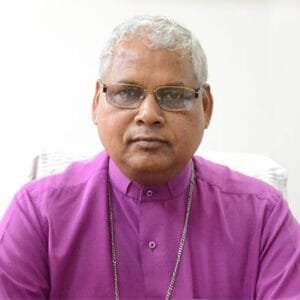
 I. Introduction: Framing the Ecclesiastical Leader
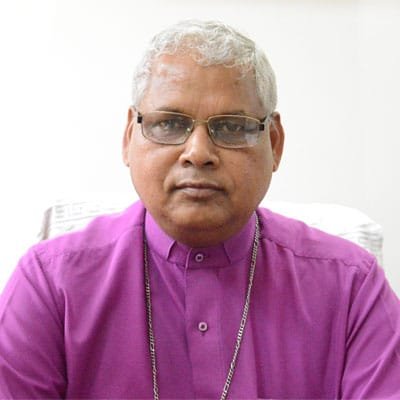
1.1. Biographical Overview and Institutional Affiliation
The Right Reverend Johan Dang is a distinguished figure within Indian Protestantism, recognized for his significant ecclesiastical leadership in both regional and national capacities within the Gossner Evangelical Lutheran Church in Chotanagpur and Assam (GELC). The GELC is a major Christian denomination in India, tracing its origins to 1845 with the arrival of German missionaries. As one of the largest and most widespread Lutheran churches in the nation, the GELC maintains robust affiliations with global ecumenical bodies, including the Lutheran World Federation (LWF), the World Council of Churches (WCC), and the National Council of Churches in India.
Bishop Dang’s influence is defined by two principal roles: as the head bishop, or Moderator, of the entire GELC body, and simultaneously as a Diocesan Bishop, specifically associated with the South-West Diocese. This dual responsibility places him at the nexus of local pastoral care and national institutional strategy.
1.2. Reconciling Titles: Bishop of the Diocese and Moderator of the Church
The administrative governance of the GELC adheres to episcopal polity, where the general administrative and pastoral functions of each constituent diocese are entrusted to its specific bishop. The presiding bishop, known as the Moderator, is elected from among these diocesan bishops and is tasked with exercising the authority of a metropolitan bishop nationwide, while typically retaining his original diocesan role as its ordinary.
Historical documents confirm that the Rt. Rev. Johan Dang held the prominent position of Moderator (or head bishop) of the GELC during a critical period in the mid-to-late 2010s. While the user query specifically references his association with the South-West Diocese, the available public records primarily detail his actions and statements made while serving in the national capacity as Moderator. This synthesis is necessary to construct an accurate biographical profile: his role as Moderator elevated his ecclesiastical authority, giving him a platform to address issues of national governance, theological integrity, and financial stewardship, all while remaining institutionally tied to the localized demands of the South-West region.
1.3. Methodology and Analytical Focus
This expert report employs a thematic approach to analyze Bishop Dang’s leadership. The analysis focuses on three key areas: Ecclesial Governance, examining his administrative reforms and reaction to schism; Theological Identity Preservation, reviewing his defense of indigenous Christian values; and Socio-Economic Stewardship, detailing his management of the church’s charitable operations during periods of national economic crisis. This comprehensive assessment aims to provide a definitive account of his contributions to the GELC and the broader landscape of Indian Christianity.
II. The Gossner Evangelical Lutheran Church (GELC) in Context: Structure, History, and Geography
2.1. Foundations and the Watershed Moment of Autonomy
The history of the GELC is foundational to understanding the administrative and philosophical context of Bishop Dang’s leadership. The church traces its roots to November 2, 1845, following the arrival of four German missionaries—Rev. Emil Schatz, Rev. August Brandt, Rev. Fredrick Basch, and Rev. Theodore Yankey—sent by Johannes Evangelista Gossner. Although their initial aim was mission work elsewhere, a decision to settle in Ranchi, Jharkhand (then part of Bihar), established the foundation for one of the largest Lutheran missions in India.
A pivotal moment in the GELC’s institutional development, one that profoundly shaped its future policies, was the declaration of autonomy on July 10, 1919. This act formalized the church’s commitment to self-governance and, crucially, financial self-reliance. This principle of self-sufficiency became a cornerstone of the church’s identity, a fact Bishop Dang himself would reference nearly a century later when defending the church’s independence during a period of national financial distress.
2.2. Administrative Polity and the 1995 Reorganization
The GELC is structured to manage a substantial and geographically dispersed membership, which numbered over 500,000 members as of 2013. To effectively administer this large body, significant structural changes were implemented. Following years of unsuccessful attempts to reach a consensus, comprehensive amendments to the church’s constitution finally came into effect on November 2, 1995.
This reorganization led to a necessary process of decentralization. The church was formally restructured into the Ranchi Headquarters Congregation and five distinct dioceses. This move was not simply a division of territory but a recognition of the diverse linguistic and cultural constituencies within the church, allowing for specialized pastoral and administrative care at the local level. The Moderator, therefore, is tasked with overseeing a complex, highly decentralized, and regionally diverse structure.
2.3. The South-West Diocese: Geography and Demographic Profile
The South-West Diocese, the regional jurisdiction specifically associated with the Rt. Rev. Johan Dang, represents a crucial area of the GELC’s ministry. According to the 1995 amendments, this diocese geographically covers the areas southwest of Ranchi.
Crucially, the jurisdiction of the South-West Diocese extends beyond the state boundaries of Jharkhand (formerly Bihar) to encompass regions of Odisha (formerly Orissa), centered specifically around Rajgangpur. This regional profile is significant, as it places the diocese at the crossroads of Adivasi (tribal) communities, demanding cross-regional ministerial coordination and specialized social services to address the unique needs of these indigenous populations across state lines. Understanding this geographic scope is vital for appreciating the depth of Dang’s regional responsibilities, even while serving as the Moderator.
The five dioceses established under the 1995 reorganization are detailed as follows:
GELC Diocesan Structure and Geographic Scope (Post-1995 Reorganization)
| Diocese Name | Headquarters/Major Area | Geographic Scope |
| North East Diocese | Assam, Tejpur | Northeastern regions of GELC influence |
| North West Diocese | Ranchi and Northwestern Areas | Northwestern Chotanagpur Plateau |
| South East Diocese | Khunti, Kadma | Southeastern Ranchi area |
| South West Diocese | Rajgangpur, Odisha | Southwest Ranchi, Odisha |
| Central Diocese | Khuntitoli, Simdega | Central tribal regions |
III. Ministerial Formation and Early Episcopal Leadership
3.1. Theological Training and Institutional Loyalty
The Rt. Rev. Johan Dang’s academic foundation in ministry was established at the Gurukul Lutheran Theological College (GLTC) in Chennai, India. Dang publicly acknowledged the profound impact the institution had on his ministerial formation, stating that the college was “a great blessing” to him and his family.
His formal testimony underscores a strong commitment to theological education rooted in the Indian context. By commending GLTC for its continued ministry in training and preparing leaders “for the Glory of Almighty God,” Dang articulates the view that indigenous theological institutions are essential for developing church leadership that is both nationally responsive and globally equipped. This commitment to local academic infrastructure informs his later administrative decisions regarding the governance of the church.
3.2. International Representation and Symbolism (2015)
Prior to, or early in, his tenure as Moderator, Bishop Dang held sufficient standing to represent the GELC on the international stage. A notable occasion was his participation in the Lutheran World Federation (LWF) Global Young Reformers Workshop held in Wittenberg, Germany, in August 2015.
During this event, Dang dedicated the GELC’s contribution to the Luther Garden, a living monument commemorating the Reformation. A young delegate from the GELC, Benison Kachhap, watered the 263rd tree, which was formally dedicated by Bishop Dang on August 27, 2015.
The dedication of this tree was more than a mere ceremonial act; it carried significant theological weight. It symbolized the historical continuity and theological rootedness of the Gossner Evangelical Lutheran Church within the global Lutheran tradition, linking the Adivasi church directly to the 16th-century movement begun by Martin Luther. Furthermore, Dang’s communication surrounding the event emphasized a theology of generational responsibility. The young delegate who watered the tree likened the care for the garden to the necessary task of “nurturing youth in the church,” an analogy that Bishop Dang’s dedication endorsed. This focused attention on cultivating youth leaders and ensuring their stability within the church body demonstrates a forward-looking leadership perspective, prioritizing sustained growth and established theological foundations.
IV. The Moderatorship: Governance, Tenure, and Ecclesial Politics
4.1. Tenure and Succession in Leadership
The tenure of the Rt. Rev. Johan Dang as Moderator marks a critical period of administrative and financial challenge for the GELC. He was demonstrably active in a high leadership capacity in 2015 , and his position as Moderator was confirmed during the national crisis of late 2016. Furthermore, academic research published around 2018 still identified him as the Moderator (head bishop) of the GELC.
While specific dates regarding the commencement and conclusion of his term are not widely published , a transition occurred sometime after 2018. The Most Rt. Rev. Marshall Kerketta is now identified as the current Moderator Bishop of the GELC. The existence of a clear succession, even without public dates, affirms that the GELC maintains structured, time-bound protocols for electing and installing its highest office bearers, underscoring the institutional maturity of one of India’s largest Protestant bodies.
4.2. Administrative Strategy: Membership and Transparency
As Moderator, Bishop Dang focused on administrative efficiency and institutional clarity. In 2018, he was reported to have actively pushed for a new, comprehensive census of the church’s members. At that time, he estimated the GELC’s membership to be in the range of 450,000–500,000 baptized members.
This initiative for accurate demographic data indicates a commitment to data-driven governance. A drive for an up-to-date census is essential for effective resource management, internal planning, and fulfilling obligations to national and international ecumenical partners. This focus on transparency was a necessary administrative effort, especially as previously cited membership figures (583,960+) may have required verification for current operational realities.
4.3. Theological Critique: Identity Politics and Ecclesial Fragmentation
Perhaps the most significant statement on ecclesiastical politics and theological identity during his tenure was his analysis of the reasons behind schismatic tendencies within the broader Lutheran movement in India, particularly regarding the North Western Gossner Evangelical Lutheran Church (NWGELC).
Bishop Dang publicly characterized the attitude of the NWGELC, a church with a large presence in states like Orissa, Jharkhand, and Chhattisgarh , as “divisive.” He critically attributed this division to the influence of “American identity politics,” arguing that several key NWGELC leaders who completed their theological education in the United States imported foreign ideological frameworks that disrupted the traditional unity and cultural integrity of the Adivasi Christian church.
This commentary represents a profound theological defense of the indigenous Adivasi identity. It is an argument that cultural preservation and theological integrity are intrinsically linked, and that globalized academic trends, especially those concerning identity and liberation theory developed in the West, risk fragmenting the local church’s rooted traditions. Dang’s stance positions him as a defender of local theological sovereignty, asserting that external intellectual imports must be carefully evaluated to prevent them from undermining the established, autonomous character of the GELC.
The chronology of Bishop Dang’s key activities highlights the concentrated period of his national leadership and his sustained presence in the church’s global representation:
Chronology of Key Events and Roles for Rt. Rev. Johan Dang
| Date/Period | Role/Event | Institutional Context/Significance | Source Reference |
| Pre-2015 | Student | Ministerial Formation at Gurukul Lutheran Theological College (GLTC) | |
| August 27, 2015 | GELC Bishop | Dedicated the GELC tree at the Luther Garden, Wittenberg | |
| December 2016 | Moderator | Addressed national media on the impact of demonetization on GELC finances and social work | |
| Cited in 2018 | Moderator | Publicly critiqued “American identity politics” influence; pressed for membership census | |
| Post-2018 | Former Moderator | Marshall Kerketta assumes the position of Moderator Bishop | |
| March 2022 | Clergy/High-Level Participant | Attended LWSIT Climate Change Adaptation and DRR workshop in Bhubaneswar, Odisha | |
| 2023 | Bishop/Delegate | Listed as an attendee at a Lutheran World Federation (LWF) Assembly |
V. Crisis Management and Financial Stewardship (The Demonetization Era)
5.1. The 2016 Demonetization Shock
One of the most defining aspects of Bishop Dang’s Moderatorship was his handling of the national economic crisis resulting from the Indian government’s demonetization announcement in November 2016. The sudden withdrawal of high-denomination currency caused severe liquidity shortages across the nation, and the GELC, deeply embedded in rural and indigenous communities, felt the effects acutely.
Bishop Dang demonstrated administrative transparency by publicly addressing the crisis’s impact on church finances. He revealed that donations received from the faithful had “dropped by more than 50 per cent” within a month of the policy’s announcement, forcing the church to cut back on philanthropic operations and plan low-key Christmas celebrations.
5.2. Autonomy as a Theological Imperative
In explaining the severity of the financial situation, Bishop Dang connected the immediate crisis to the church’s historical identity. He explicitly reiterated that since the declaration of GELC autonomy on July 10, 1919, the church’s financial policy had been one of strict self-reliance, meaning all activities were financed solely through donations from its own people, without relying on outside sources.
This historical affirmation served to articulate a crucial theological principle: financial sovereignty is integral to institutional dignity and spiritual autonomy. The crisis tested this principle, but the community’s response reinforced it. Dang noted that people in remote areas, lacking cash, were offering “rice and vegetables instead of cash”. This acceptance of in-kind offerings underscores the deep, organic bond between the Adivasi faithful and the church, ensuring survival through a return to fundamental communal exchange rather than dependence on external financial mechanisms. This adherence to self-sufficiency, even in the face of widespread hardship, demonstrated resilient leadership. While acknowledging the hardship and lamenting the cash crunch, the Moderator expressed appreciation for the government’s stated intent to curb black money, conveying a measured and compliant stance toward national policy.
5.3. Protection of Social Ministries
The primary administrative concern raised by Bishop Dang was not the decline in institutional wealth, but the threat to the church’s essential social safety net. The drop in collections meant the church lacked the necessary cash to sustain its charitable work, which included vital support services.
Dang emphasized the cyclical relationship: “While the church depends on its faithful, its people too depend on the church in their hour of need.” The cash crunch adversely affected the payment of pensions, the provision of support for the sick and needy, and the continuation of scholarships for impoverished students. This focus illustrates that for Bishop Dang, the integrity of the church’s mission was measured by its ability to protect and serve its most vulnerable members. His leadership during this crisis prioritized the communication of the financial gravity in order to advocate for the continuation of critical charitable activities.
VI. Post-Moderatorship Activities and Sustained Influence
6.1. Return to Regional and Social Ministry
Although his term as Moderator concluded sometime after 2018, the Rt. Rev. Johan Dang has maintained an active role in high-level institutional and social ministry initiatives, particularly those tied to the geographic responsibilities of his region.
His continued involvement in applied social programs is evident in his participation in the Staff Capacity Building Program on Climate Change Adaptation and Disaster Risk Reduction (DRR) in Bhubaneswar, Odisha, held from March 23 to March 25, 2022. Bhubaneswar, the capital of Odisha, falls directly within the geographic and ministerial sphere of influence of the South-West Diocese. His presence at this event, focused on the principle of “Think Globally and Act Locally,” demonstrates a practical application of faith to address critical contemporary issues such as environmental stewardship and community resilience, issues of paramount importance to the marginalized and indigenous populations the GELC serves.
6.2. Continuing Ecumenical Representation
Bishop Dang retains significant influence as a spiritual elder and institutional figure within the GELC. This status is confirmed by his ongoing engagement in global church affairs. He was listed as a Bishop/Delegate of the Gossner Evangelical Lutheran Church in Chotanagpur and Assam during a Lutheran World Federation (LWF) Assembly report in 2023.
This sustained, high-level participation in international forums confirms his continuing mandate to represent the GELC externally. His enduring presence ensures the GELC maintains crucial ecumenical ties, reflecting the church’s stability and its long-standing status as a vital part of the global Lutheran communion.
VII. Conclusion: Defining the Legacy of Rt. Rev. Johan Dang
The ecclesiastical career of the Rt. Rev. Johan Dang, defined by his leadership of the South-West Diocese and his tenure as Moderator of the Gossner Evangelical Lutheran Church, provides a case study in resilient, indigenous church leadership.
His legacy is characterized by several interrelated themes. First, he was a champion of institutional self-sufficiency, leveraging the historical autonomy of the GELC to articulate a financial theology that emphasized reliance on the Adivasi faithful, thus preserving the church’s sovereignty even under duress, as demonstrated during the 2016 demonetization crisis. Second, he provided a crucial defense of indigenous theological identity by offering an intellectual critique of external ideological influences, specifically those he perceived as contributing to fragmentation and divisiveness within the body of Christ in India. Third, his administration was marked by an active commitment to transparent and practical stewardship, focusing on accurate data (the membership census) and ensuring that the church’s primary resources were dedicated to the maintenance of the social safety net for the vulnerable populations of the Chotanagpur and Assam regions, extending into Odisha.
Although traditional biographical details regarding his birth and full tenure dates remain elusive in public records, the evidence overwhelmingly points to Bishop Dang as a foundational leader who successfully steered the GELC through a period of modernization, financial shock, and internal geopolitical complexity. His sustained involvement in both ecumenical governance and focused social ministry continues to shape the trajectory of one of India’s most important Christian denominations.